
USA Borescopes inspection solutions make nuclear monitoring both safer for personnel and easier for organizations!
USA Borescopes provide an array of remote visual inspection scopes that offer a non-destructive testing approach. These scopes are ideal for use across a wide range of industries, including high-risk environments such as nuclear facilities, improving not only efficiency but also reducing safety risk to inspection personnel.
The connection between exposure to radiation and risk is a well-known safety issue. It is also an issue that those working in the nuclear sector must mitigate. Not only to remain compliant with national and international law, but also to preserve the safety and health of their workers who work with these radioactive materials.
Borescopes are ideally positioned for this task because they are specifically designed to offer visual insight into areas not easily visible or accessible. Such inspections are crucial for the safety, productivity and reliability of nuclear facilities as they enable workers to check that facilities are working within tolerances. By using a borescope for this task, workers can perform all the non-destructive inspections they need while maintaining a safe distance and avoiding harmful levels of radiation. Find out more about using a borescope in this context below.
Minimizing Radiation Expose In The Nuclear Sector
Safety regulations are stringent in the Nuclear Sector, with the Nuclear Regulatory Commission (NRC) being able to issue penalties, fines, increase oversight, and even ultimately order a plant shut down if they are not maintained. These regulations are in place to protect both the general public and those who work within such facilities.
In particular, the NRC’s regulations state that employees should only be exposed to a maximum of 5 rems over a year. This is much less than a typical person not working in the nuclear sector would be exposed to, but it is deemed safe. Of course, the aim is to get exposure well below this limit and ensure that workers stay safe while ensuring the safety of the plant.
Nuclear facilities can help keep radiation exposure low by using the ALARA approach. ALARA stands for As Low As Reasonably Achievable and is designed to preserve the safety of workers as they go about their job of keeping the plant running safely and effectively. New technologies and innovations, including borescopes, which are a form of remote visual inspection tech (RVI), are often used to maintain the ALARA principle in nuclear facilities and minimize safety risk.
How Remote Visual Inspection Technology Is Used In The Nuclear Sector
In addition to the regulations that surround the exposure of workers to radioactive materials, nuclear plants are also strictly regulated and inspected to ensure maximum safety to the public. This means quickly identifying the cause and source of any radiation leaks, such as blockages or corrosion, and dealing with them rapidly is critical.
For these actions to happen, inspections must take place, often in high radiation areas which cannot be accessed by workers while active. One such area is the fuel rod and cooling system, in which corrosion, cracks and even blockages can occur in either the piping that serves the system or the cooling rods themselves.
Another is the reactor vessel, where joints can fail due to welding. The vessel is a complex piece of machinery, hard to disassemble and decontaminate. Yet a borescope can be used to allow access to even small and difficult-to-access points. All while at the same time, helping to maintain the strict rules on the amount of radiation a worker in a nuclear power plant can be exposed to without a shutdown and decontamination.
The critical tension in the nuclear field comes from the level of unacceptable risk for workers if they were to enter this area, versus the productivity issues related to shutting down the reactor and decontaminating it to make it safe. Something that could potentially leave huge areas without life-sustaining power for a long time. These issues leave those running nuclear facilities in a Catch-22 situation where unacceptable risk is found on both sides.
Unless there was a way of allowing the reactor to continue to run while also taking care of the safety of those inspecting it. The good news is that there is such a way, and it is by using borescopes, which are perfectly crafted for this kind of task as they reduce both distance and time of exposure while still being able to accurately detect potential issues before they become major problems.
Reasons Why USA Borescopes Systems Are Perfect For Nuclear Monitoring And Inspection
Borescopes are safe for high-risk environments.
USA Borescopes systems are available in a wide range of options, including explosion-proof models that are designed to withstand even the harshest of conditions.
Borescopes can be deployed quickly.
Another reason USA Borescopes are an ideal choice for use in nuclear monitoring and inspection is that they are quick and easy to deploy. This means that teams can find minor issues without delay before they develop into major problems that could threaten the safety of the entire operation.
Borescopes allow for remote inspection.
The further away workers are from a source of radiation, the less exposure they will experience. The less exposure they get, the safer they will be, and the more compliant your facility will be with the NRC regulations.
The good news is that USA Borescopes systems are available in extra-long lengths with articulation of up to 30 meters (100 feet). This means those inspecting the radioactive area can do so effectively, but from a safe distance.
Borescopes can be Customized.
Available with a wide selection of different types of tubing and pipes, USA Borescopes equipment can also be customized to your facility’s specific needs. In turn, this can help you not only complete your inspections more effectively but also reduce the risk of contamination, and used tubes can easily be replaced.
Borescopes offer high-quality visuals.
USA Borescopes come with either superior CCD or excellent CMOS imaging sensors. CCD or charge-coupled device sensors are made from photosensitive pixels. These pixels can soak up light, changing it into an electric charge. The complex chip at work inside the CCD then evaluates this charge and makes it into a digital image, allowing users to see a high-resolution image with their eyes as it’s displayed on the screen.
CMOS or Complementary Metal Oxide Semiconductor imaging sensors work in a very similar way to CCD sensors in that they use pixels to capture light and convert it into an image. However, a CMOS system does not require a chip to facilitate this and instead can process each pixel, combining them to make an image. This image can then be manipulated in terms of contrast, color and brightness to ensure the best possible visuals for the user.
Borescopes are portable
Last of all, the systems that USA Borescopes provide are designed to be portable. This makes them ideal for nuclear monitoring because of the physically hard-to-reach places such as fuel rods, cooling systems, the reactor vessel and other areas of containment that those in the industry need to be able to inspect.
USA Borescopes’ Premium Nuclear Inspection And Monitoring Equipment
Internationally known for their high-quality scope technology, USA Borescopes are the single-stop solution for all your non-destructive inspection needs. Their products not only produce the highest quality images for ease of analysis, but they are also famous for being robust enough to withstand some of the most challenging environments, while also being portable and lightweight at the same time.
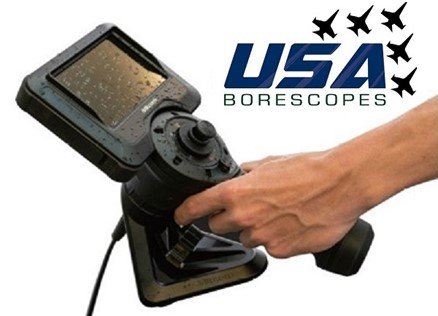
USA Borescopes are also famous for the wide range of scopes they stock, including their USA2000 Series videoscope system which is both flexible and compact, allowing them to easily access difficult-to-reach spaces while maintaining excellent handling, which can help with easy maneuverability in high-risk environments like nuclear reactors. This long length borescope is available with up to 10 meters (32.8 feet) of working length.
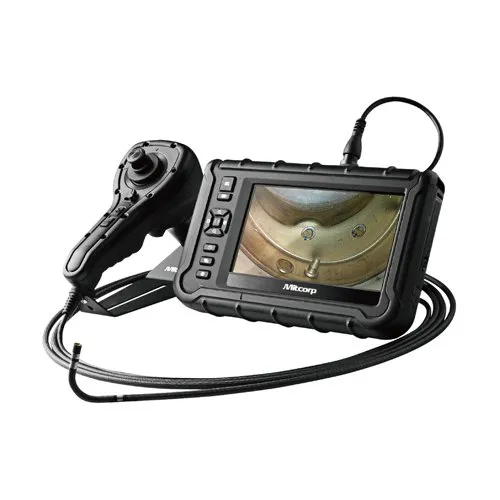
If you require an Extra long length inspection camera for Nuclear Inspections the Vuman E3 system may be perfect for you. This 8mm diameter system is available with up to 30 meters of working length with pneumatic articulation in all directions. Large HD touch screen that allows the nuclear inspector to document the entire inspection process.

Even some of their Explosion Proof Borescopes could have applications in the nuclear sector, as they could be used for inspecting piping systems that are inaccessible due to being confined or located underground. Many of these systems are waterproofed and certified for use in more challenging environments, and have special safety features built in to ensure minimal risk.
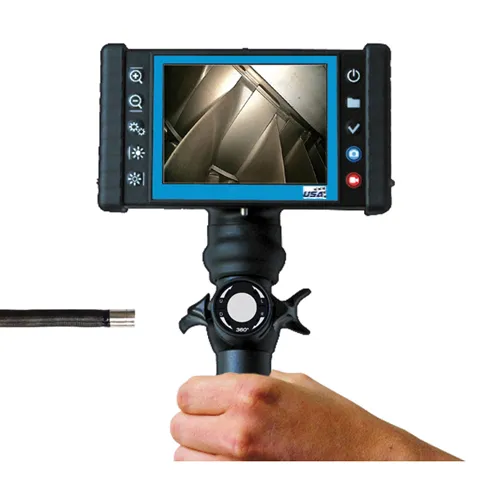
In addition to selling or leasing this wide range of exceptional scopes, the experts at USA Borescopes can advise you on the device that is perfectly suited to your inspection needs.
If you would like to know more about how you can use borescopes in nuclear inspection and monitoring, please contact Shayne Gallo at Shayne@USABorescopes.com