

Microscopes aren’t one-size-fits-all, especially when magnification is the deciding factor. Technicians in electronics, biology, manufacturing, and quality control rely on tools with proper magnification, as it ensures precision, reduces errors, and allows for detailed inspection of components, specimens, or materials.
One of the most practical tools technicians can use is a microscope magnification chart. Here, we explain what a microscope magnification chart is, why it matters, and how technicians can use it to achieve accurate results.
What Is a Microscope Magnification Chart?
A microscope magnification chart is a visual reference that maps the relationship between a microscope’s objective lenses, eyepieces, and the total magnification they produce. It serves as a quick guide for technicians to select the appropriate magnification for their specific task.
Microscope magnification is determined by two key components:
- Objective Lens Magnification: This is the primary lens closest to the specimen. Typical magnifications include 4x, 10x, 40x, and 100x.
- Eyepiece (Ocular Lens) Magnification: Usually 10x or 15x, the eyepiece further enlarges the image produced by the objective lens.
The total magnification is calculated by multiplying the objective lens by the eyepiece. For example, a 40x objective lens with a 10x eyepiece gives a total magnification of 400x.
A microscope magnification chart often displays this information in a simple table, showing all possible combinations of objectives and eyepieces along with the resulting magnification.
Why Technicians Need a Microscope Magnification Chart
Technicians benefit from using a microscope magnification chart for several reasons:
- Quick Reference: Instead of calculating magnification each time, technicians can glance at the chart to identify the correct setting. This saves time and reduces errors during inspections.
- Consistency: Using the correct magnification ensures that measurements, imaging, or observations are consistent across multiple inspections or technicians.
- Optimized Observation: Different tasks require different levels of detail. For example, solder joint inspection on a circuit board may require 40x–100x magnification, while examining component alignment may only need 10x–20x. A magnification chart helps technicians quickly determine the right level of detail.
- Training Tool: For new technicians, a microscope magnification chart is a visual aid that helps them understand how objectives and eyepieces work together.
Components of a Microscope Magnification Chart
A standard microscope magnification chart usually includes the following:
- Objective Lens Magnifications: Lists all available objectives on the microscope.
- Eyepiece Magnifications: Lists compatible eyepieces.
- Total magnification: Shows the product of objective and eyepiece combinations.
- Field of View (Optional): Some charts also indicate the approximate visible area at each magnification, which is helpful for technicians needing precise measurements.
Here’s a simple example of a microscope magnification chart:
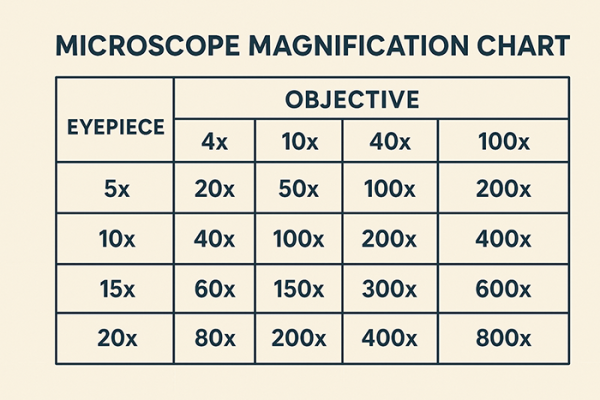
This format allows technicians to quickly select the correct magnification for the task at hand.
Tips for Using a Microscope Magnification Chart Effectively
Know Your Task
Always start by determining the level of detail required. For surface inspections, lower magnifications might be sufficient, while internal defects or microscopic structures may require higher magnifications.
Use Consistent Settings
When documenting inspections or sharing observations, always note the magnification used. A microscope magnification chart helps ensure consistency between different inspections.
Adjust Lighting Accordingly
Higher magnifications often require more precise lighting adjustments. A magnification chart can remind technicians that increasing magnification may necessitate changes to illumination.
Maintain Your Equipment
Regular calibration of objectives and eyepieces ensures that the magnification chart remains accurate. Over time, wear or misalignment can affect image clarity and measurement accuracy.
Enhance Inspection Accuracy With Professional Microscopy Tools
A microscope magnification chart is more than just a reference tool; it is a crucial part of any technician’s workflow. By providing a quick, clear guide to objective and eyepiece combinations, it enables accurate inspections, consistent results, and efficient operation. Whether you are a seasoned professional or a trainee, integrating a microscope magnification chart into your work routine can improve precision, save time, and enhance the overall quality of your inspections.
For technicians looking to elevate their inspection capabilities, we offer a wide range of high-quality microscopes and inspection tools designed for precision and reliability. By combining the right equipment with a microscope magnification chart, you can ensure every detail is captured clearly and accurately assessed.
Discover industry-leading tools trusted by technicians worldwide — explore the USA Borescopes collection today.