
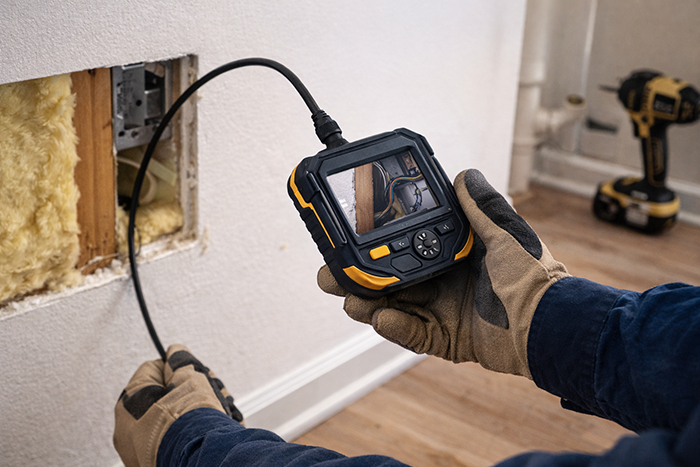
When a problem is hidden behind drywall, inside a ceiling cavity, or deep within a tight structural space, tearing open walls isn’t always the best first step. It is expensive, time-consuming and, in many cases, it’s also unnecessary as non-invasive inspections can help pinpoint the issue first.
That is why in wall inspection tools, especially inspection cameras and borescopes, have become the go-to solution for contractors, HVAC technicians, electricians, plumbers, home inspectors, and restoration professionals. Using the right visual inspection technology allows professionals to diagnose issues quickly, access hard-to-reach areas, and verify repairs with minimal disruption.
This guide breaks down everything you need to know about in-wall inspection, why it matters, the tools required, and best practices used across the industry.
What Is an In-Wall Inspection?
An in wall inspection is a non-destructive process used to view the inside of walls, ceilings, or enclosed cavities without removing large sections of building material. When using a borescope or inspection camera, the technician inserts a small probe through a very small access point, often no larger than a drill hole.
This makes it possible to inspect:
- Electrical wiring
- Plumbing lines
- HVAC ductwork
- Insulation
- Structural framing
- Pipes, valves, and fittings
- Pest or rodent activity
- Mold, moisture, and water damage
- Fire damage behind walls
Professionals use in-wall inspections to confirm problems, avoid unnecessary demolition, and accurately estimate repairs.
Why In-Wall Inspections Matter
Traditional inspection methods often require cutting into walls, removing drywall, or partially disassembling surrounding structures. This approach adds cost, creates dust, requires patching, and lengthens project timelines.
Using an inspection camera for in wall inspection offers several benefits:
- Non-Invasive Diagnostics: Technicians can see inside walls with minimal structural impact, helping them diagnose leaks, damaged wiring, or insulation gaps without demolition.
- Faster Problem Identification: Images and video provide instant clarity, reducing guesswork and speeding up decision-making.
- Cost Savings for Customers: Fewer wall openings mean fewer repairs and fewer surprises on the bill.
- Verification of Completed Repairs: In-wall cameras help confirm that plumbing joints, electrical connections, or remediation work have been properly completed.
Improved Safety
Inspecting confined spaces visually reduces the need for unnecessary physical entry into hazardous areas.
Tools Used for In-Wall Inspection
Not all inspection cameras are the same. Professionals rely on borescopes and videoscopes specifically designed for tight, enclosed spaces.
Videoscopes
A videoscope is one of the most effective tools for in-wall inspection. These feature:
- High-resolution video displays
- LED illumination
- Flexible or semi-rigid insertion tubes
- Articulating camera tips for adjustable viewing angles
- Image and video recording for reporting
Videoscopes are ideal for complex path navigation or when the technician needs a clear, detailed view of internal components.
Borescopes
Borescopes, which may be rigid or flexible, are commonly used for small access points and straight-line viewing.
These are frequently used by:
- Electricians checking for wire damage
- HVAC technicians inspecting duct obstructions
- Plumbers identifying hidden leaks
USA Borescopes offers a wide range of versatile borescope models designed to meet the demands of professionals across multiple industries.
Common Applications of In-Wall Inspection
Plumbing
Plumbers use in-wall inspection tools to locate pipe leaks, corroded fittings, blockages, cross-connected lines, and evidence of mold or water intrusion. A borescope helps pinpoint the problem with precision.
Electrical Work
Electricians assess overheated or damaged wiring, loose connections, rodent-chewed cables, and overcrowded junction boxes. This helps prevent hazards and ensures code-compliant repairs.
HVAC and Mechanical Systems
Technicians inspect duct interiors, condensation issues, blockages, collapsed ductwork, and improper seals. Borescopes help reduce diagnostic time and avoid unnecessary system disassembly.
Home Inspections
Home inspectors uncover insulation deficiencies, mold, structural concerns, and signs of pests or water damage. Clear images support documentation for buyers, sellers, and insurance companies.
Restoration and Remediation
Water, mold, and fire restoration professionals use in-wall cameras to document damage and monitor remediation progress.
Best Practices for Professional In-Wall Inspection
- Use the Right Probe Diameter
- Choose Strong, Adjustable Illumination
- Record Everything
- Be Aware of Hidden Hazards
- Use Articulation When Needed
Why Professionals Trust USA Borescopes
USA Borescopes provides industry-leading inspection equipment, designed for tight spaces and tough environments, that delivers:
- High-resolution imaging
- Durable construction
- Flexible and articulating options
- Small-diameter probes ideal for in-wall inspection
- Reliable support and expert guidance
Whether you are diagnosing a leak, verifying repairs, or conducting a home inspection, having the right tool makes all the difference.
Professional In-Wall Inspection Tools for Accurate Diagnostics
An in wall inspection gives professionals clear access to hidden spaces without demolition. With the right borescope or videoscope, technicians can diagnose problems faster, reduce costs, and improve accuracy across every project. USA Borescopes is proud to support contractors, inspectors, and restoration teams with advanced inspection tools built for performance and reliability.
Speak with our technical specialists to upgrade your inspection equipment today.